Insurance fraud detection technology is revolutionizing the way insurance companies combat deceitful claims. As fraud becomes increasingly sophisticated, insurers are turning to advanced technologies to protect their interests and ensure fair practices. This technology encompasses a range of tools and methodologies designed to identify and prevent fraudulent activities, ultimately safeguarding both the insurer and the insured.
Key advancements such as artificial intelligence and machine learning play a pivotal role in enhancing the accuracy of fraud detection systems, enabling real-time data analysis and predictive modeling. From biometric authentication to data analytics, these innovations are essential for navigating the complex landscape of insurance fraud.
Overview of Insurance Fraud Detection Technology
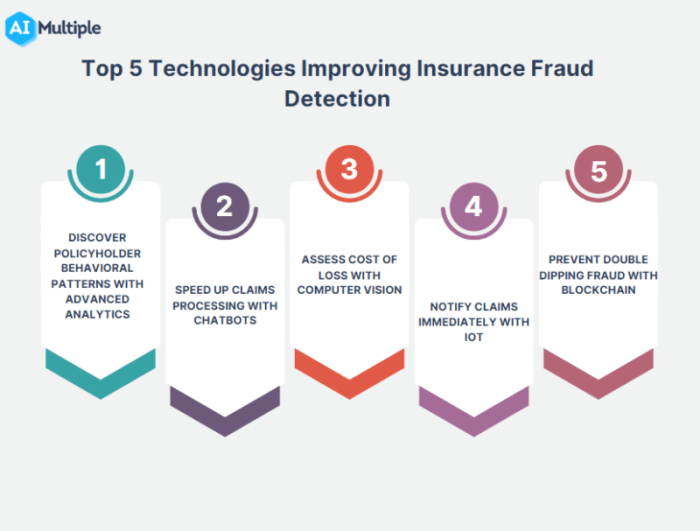
Insurance fraud detection technology is an essential component of the insurance industry, designed to identify, prevent, and mitigate fraudulent activities that can lead to substantial financial losses. With the increasing sophistication of fraud schemes, these technologies have evolved significantly, incorporating advanced methodologies to safeguard insurance providers and their policyholders.The fundamentals of insurance fraud detection technology revolve around the collection, analysis, and interpretation of vast amounts of data.
By leveraging various types of technologies, insurers can detect anomalies that may indicate fraud, thus enabling proactive measures to be taken. These technologies include data mining, predictive analytics, and real-time monitoring systems that are essential in streamlining the fraud detection process.
Types of Technologies in Insurance Fraud Detection
A variety of technologies are utilized to enhance the effectiveness of fraud detection systems. Each plays a critical role in identifying and addressing fraudulent claims:
1. Data Analytics
This involves the examination of large datasets to uncover patterns and trends that may suggest fraudulent behavior. By employing statistical techniques, insurers can distinguish legitimate claims from potentially fraudulent ones.
2. Predictive Modeling
Insurers use predictive modeling to forecast the likelihood of fraud based on historical data. Models can analyze various factors, such as claim amounts and claimant profiles, to predict which claims are at higher risk.
3. Machine Learning
Machine learning algorithms improve over time by learning from past data. They can adapt to new fraud patterns, enhancing the accuracy of fraud detection. For instance, a machine learning model can identify unusual patterns in claims, flagging them for further investigation.
4. Artificial Intelligence
AI technologies are revolutionizing the industry by automating the fraud detection process. AI can analyze complex data sets at speeds unmatched by humans, providing insurers with real-time insights and alerts.
5. Natural Language Processing (NLP)
NLP helps in analyzing unstructured data, such as claim descriptions and policyholder communications. By interpreting the language used, NLP can identify inconsistencies or suspicious phrases that may indicate fraud.
The Role of Artificial Intelligence and Machine Learning
Artificial intelligence and machine learning are integral to modern insurance fraud detection systems, offering advanced capabilities that significantly enhance fraud identification. These technologies not only automate routine tasks but also improve the accuracy of fraud assessments.Machine learning employs algorithms that can recognize patterns in data without explicit programming. As these algorithms process more data, they become increasingly adept at distinguishing between normal behavior and potential fraud.
For example, if a fraudster typically submits claims shortly after purchasing a policy, machine learning algorithms can flag this behavior for further scrutiny.Artificial intelligence complements this by providing a framework for decision-making. AI systems can analyze diverse data sources, including social media activity and online behavior, to build comprehensive profiles of claimants. This holistic approach enables insurers to detect fraud before it can result in significant financial loss.Incorporating these technologies not only enhances the detection capabilities of insurance companies but also fosters a culture of transparency and accountability in the industry.
Techniques and Methods in Fraud Detection
Insurance fraud detection has evolved significantly with advancements in data analytics and technology. As fraudulent claims become more sophisticated, insurers must adopt innovative approaches to identify and mitigate risks. Various techniques and methods are utilized to analyze data and spot anomalies that signify potential fraud, making the insurance landscape safer for legitimate policyholders.
Data Analytics Methods in Identifying Fraudulent Claims
Data analytics plays a pivotal role in detecting insurance fraud. By examining vast datasets, insurers can uncover patterns and trends that are indicative of fraudulent behavior. Predictive analytics, machine learning, and big data technologies are at the forefront of these efforts. These methods utilize historical claim data, customer behavior, and external data sources to develop models that can effectively flag suspicious activities.
Predictive analytics involves using statistical algorithms and machine learning techniques to identify the likelihood of future outcomes based on historical data. Insurers often employ various models that analyze factors such as claim frequency, claim amount, and the relationship between claimants and service providers. The insights gained from these analyses enable insurers to make informed decisions when processing claims. Furthermore, anomaly detection algorithms can identify outliers in data, alerting insurers to potential fraud.
Common Algorithms Employed in Fraud Detection Technology
In the realm of fraud detection, several algorithms have proven effective in identifying fraudulent claims. Understanding these algorithms is crucial for insurance companies looking to enhance their fraud detection capabilities. Below are some common algorithms utilized in this field:
- Logistic Regression: A statistical model that predicts the probability of a binary outcome (e.g., fraudulent or not fraudulent) based on one or more predictor variables.
- Decision Trees: A flowchart-like structure that utilizes branching methods to illustrate every possible outcome of a decision, facilitating clear decision-making based on data.
- Random Forest: An ensemble of decision trees that improves the accuracy and robustness of predictions by combining multiple tree outputs.
- Support Vector Machines (SVM): A classification algorithm that finds the optimal hyperplane to separate data into distinct classes, useful for identifying fraudulent claims.
- Neural Networks: A set of algorithms inspired by the human brain, capable of identifying complex patterns in data, which makes them powerful for fraud detection.
These algorithms leverage vast amounts of data to enhance predictive accuracy, allowing insurers to stay a step ahead of fraudsters.
Impact of Biometric Authentication in Insurance Fraud Detection
Biometric authentication is transforming the insurance fraud detection landscape by adding an extra layer of security. As technology advances, biometric methods such as fingerprint recognition, facial recognition, and voice recognition are increasingly utilized to verify the identities of policyholders and claimants. This technology significantly reduces the risk of identity theft and fraudulent claims.
The implementation of biometric authentication allows insurers to ensure that the individual submitting a claim is indeed the policyholder. By using unique biological traits, insurers can prevent unauthorized access and protect sensitive information. For instance, facial recognition systems can compare a claimant’s live image with a stored image in the insurer’s database, ensuring a secure match before processing the claim.
Additionally, biometric authentication enhances customer experience by simplifying the verification process, as clients no longer need to remember complex passwords or security questions.
As fraud detection technology continues to evolve, the integration of biometric solutions stands as a robust defense against fraudulent activities, ensuring a safer environment for both insurers and policyholders alike.
Challenges and Future Trends
The realm of insurance fraud detection technologies is evolving rapidly, but it is not without its challenges. As the industry adapts to new technologies and methods, various hurdles must be overcome to ensure effective fraud detection. Likewise, emerging trends are shaping the future landscape of insurance, influencing how companies approach fraud prevention. Additionally, regulatory changes are poised to impact the effectiveness and implementation of these technologies.
Challenges in Implementation
Implementing fraud detection technologies presents several significant challenges that insurance companies must navigate. The complexity of fraudulent activities often outpaces the sophistication of detection technologies, leading to potential gaps in effectiveness. Key challenges include:
- Data Quality and Integration: Poor quality data can hinder the accuracy of fraud detection algorithms. Integrating data from multiple sources remains a hurdle, as inconsistencies and incomplete information can skew results.
- Cost of Technology: While advanced technologies such as AI and machine learning can enhance fraud detection, the initial investment and ongoing maintenance costs can be prohibitive for smaller insurers.
- Resistance to Change: Many organizations face internal resistance when transitioning to new technologies. Employees may be accustomed to traditional methods, leading to a reluctance to adopt innovative solutions.
- Regulatory Compliance: Adhering to strict regulations while implementing new technologies can complicate the adoption process, requiring additional resources and adjustments to existing workflows.
Emerging Trends in Fraud Detection
As the insurance industry continues to evolve, several emerging trends are shaping the landscape of fraud detection. These trends are driven by advancements in technology and the growing sophistication of fraudulent schemes. Notable trends include:
- AI and Machine Learning: The integration of artificial intelligence and machine learning is revolutionizing fraud detection, allowing for real-time analysis of claims and improving the ability to identify suspicious patterns.
- Predictive Analytics: Utilizing predictive analytics enables insurers to forecast potential fraud scenarios based on historical data, enhancing proactive measures against fraud attempts.
- Blockchain Technology: The adoption of blockchain can improve transparency and security in transactions, reducing the risk of fraudulent activities by creating immutable records.
- Collaboration and Data Sharing: Collaborative efforts among insurers to share data on fraudulent activities can lead to more accurate detection and prevention methodologies.
Impact of Regulatory Changes
Regulatory changes are likely to have a profound impact on insurance fraud detection technologies. As regulations evolve, insurers must adapt their strategies and technologies to remain compliant while effectively combating fraud. Important considerations include:
- Data Privacy Regulations: The implementation of stricter data privacy laws may limit the amount of data that insurers can use for fraud detection, challenging their ability to identify fraudulent claims effectively.
- Standardization of Practices: New regulations may lead to standardized practices in fraud detection, encouraging the development of industry-wide solutions that can enhance cooperation among insurers.
- Increased Scrutiny: As regulators focus more on fraud prevention, insurers might face heightened scrutiny regarding the effectiveness of their fraud detection systems, necessitating continuous improvement and reporting.
Epilogue
In conclusion, the evolution of insurance fraud detection technology is crucial in maintaining the integrity of the insurance industry. As challenges persist and new trends emerge, staying ahead of fraudsters requires ongoing adaptation and innovation. Embracing these technologies not only helps in minimizing losses but also fosters trust among policyholders, ensuring a safer insurance environment for everyone.
Answers to Common Questions
What are the main types of technologies used in fraud detection?
Common technologies include data analytics, machine learning algorithms, and biometric systems that work together to identify fraudulent activities.
How does artificial intelligence improve fraud detection?
AI enhances fraud detection by analyzing vast amounts of data quickly, recognizing patterns, and making predictions about potential fraud risks.
What role does data analytics play in identifying fraudulent claims?
Data analytics allows insurers to scrutinize claims data for anomalies and trends that may indicate fraudulent behavior, leading to more effective investigations.
What challenges do insurers face when implementing fraud detection technologies?
Major challenges include integration with existing systems, data privacy concerns, and the need for ongoing updates to keep up with evolving fraud tactics.
How might regulatory changes affect fraud detection technology?
Regulatory changes can influence the types of data that can be collected and how it is used, potentially affecting the efficacy of fraud detection systems.